What is the beam mass?How round is the spot?You can’t tell the difference really,this article will tell you the basics of lasers
Author: Laserion Published on: 2025-08-09
Lasers are one of the core drivers of modern technology.From medical surgery,industrial precision manufacturing,automatic lidar driving,to various scientific innovations,solid state lasers have been widely used due to their high efficiency,stability and compactness.Deep understanding of the working principle of solid-state lasers(including the core role of gain media,pump source and resonator)is not only the key to understanding the logic behind everyday technology,but also an indispensable foundation for participating in the development of cutting-edge technology or high-end manufacturing.It can be said that mastering it is to master a key to open the door of future key technologies.
PART 01Basic Output Characteristics
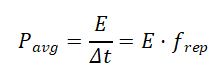
Output power:It refers to the laser energy output per unit time within a repetition period.It is the product of pulse energy and pulse repeat frequency.The unit is the watt(W).
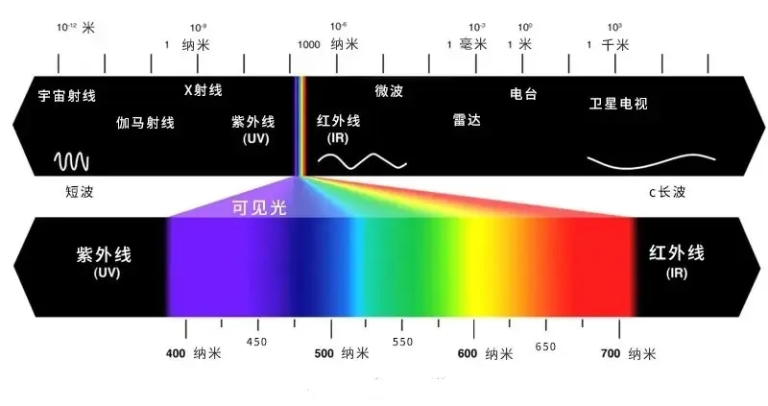
Wavelength: Refers to the output wavelength of the laser,which is an important parameter of the laser beam output.Different wavelengths represent different light sources.For example,the wavelength of green laser is usually around 532 nm,while the wavelength range of infrared laser is wide,generally between 800 nm and 2000 nm.
PART 02Pulse Characteristics(for Pulsed Lasers)
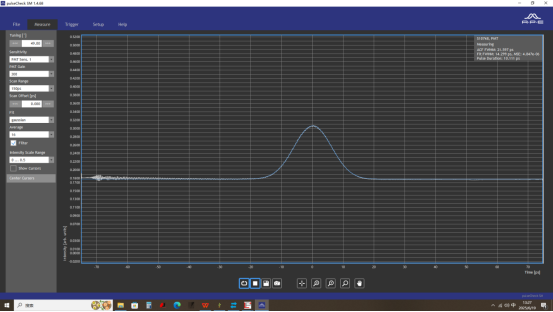
Pulse width:The pulse width of the laser is the time length of the laser pulse,which is one of the important parameters.Different lasers can produce pulses of different time scales,usually described in units of nanoseconds,picoseconds,femtoseconds,etc.The smaller the order of magnitude,the shorter the duration of laser action.
1.Long pulse laser:Pulse width is usually in the microsecond(μs)to millisecond(ms)order.This laser is usually used in situations where higher average power and longer operating time are required,such as laser welding,laser cutting and other industrial applications.
2.short pulse laser:pulse width in the nanosecond(ns)order.This kind of laser has a high peak power and a short action time,which is suitable for situations that need precise control of laser action,such as laser marking,laser ranging etc.
3.ultra-short pulse laser:pulse width in the picosecond(ps)or femtosecond(fs)00order.Ultrashort pulse laser has extremely high peak power and extremely short action time,which can realize precise control of material microstructure,which is widely used in fine machining,biomedicine and other fields.
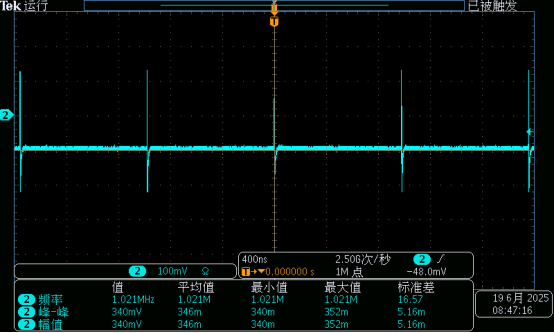
Repetition rate:The repetition rate of the laser is the number of pulses emitted by the laser per unit time,usually in Hertz(Hz).The repetition rate is one of the most important parameters to measure the speed and performance of a laser,which is essential for many applications.
PART 03Beams Quality and Optical Properties
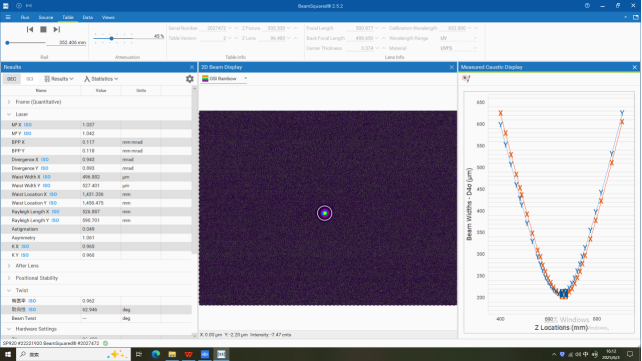
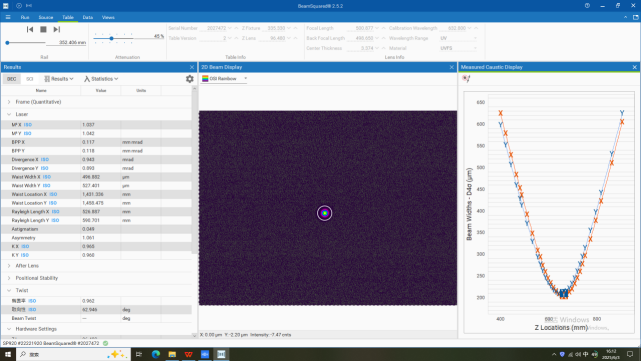
Beam quality:The definition of beam quality includes:far-field spot diameter,far-field divergence angle,diffraction limit multiple U,Strehl ratio,power or ring energy ratio on the target surface.
Mathematical expression:
Among them:M²=1(diffraction limit)of an ideal Gaussian beam(fundamental mode TEMoo).
The actual beam M²≥1,the larger the value,the worse the beam quality.
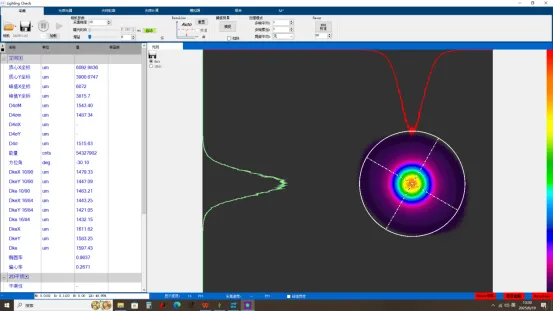
Spot diameter:The spot diameter usually refers to the cross-sectional diameter of the laser beam at a specific distance,which can also be understood as the diameter of the circular or elliptical spot formed by the laser beam on the target surface.The size of the spot diameter depends on a variety of factors,including the diffusion angle of the laser beam,the focal length and quality of the focusing system,and the distance between the target surface and the laser Beam.In laser applications,the size of the spot diameter is critical to the precision and efficiency of the process.In general,smaller spot diameters mean higher spatial resolution and machining accuracy,but may require more complex optical systems to achieve.Conversely,larger spot diameters may reduce spatial resolution but may be more suitable for rapid processing in some cases.
Spot roundness:Spot roundness is the degree of similarity between the shape of the laser beam cross section and a perfect circle.Used to measure the symmetry and uniformity of light spots on a plane.The degree of circle is usually expressed as a ratio or percentage,and the closer the value is to 1or100%,the closer a spot is to an ideal circle.One of the methods of calculating the circle of a spot is to utilize the ratio of the minimum diameter to the maximum diameter of the spot.The roundness of laser spot is an important index in laser processing and optical system design.Higher roundness of the spot usually means less distortion of the laser beam during transmission,thus ensuring better focus and more precise machining.At the same time,the high roundness of the spot can also reduce the inhomogeneity of the optical system and help to improve the optical performance.
Spot divergence angle:The spot divergence angle is the angle at which the spot diameter of the laser beam gradually increases during the propagation process after the laser beam is output from the source or the optical system.This parameter is used to describe the divergence of a laser beam, usually in units of mrad(A radian or degree.The size of the divergence angle affects the ability of the laser beam to focus and the size of the spot at a specific distance,which is a key performance indicator for many applications.The larger the angle of incidence,the larger the spot size at the same distance.
Beam pointing stability:Beam pointing stability is the ability of a laser beam to maintain its directionality during propagation.
Spot position accuracy:Spot position accuracy refers to the degree of accuracy of the spot’s position in space,that is,the degree of deviation between the actual spot position and the desired or theoretical spot position.
PART 04Stability and Aolarization Properties
Polarization ratio:The polarization ratio of a laser is an important parameter describing the polarization state of a laser beam.It refers to the ratio of the electric field intensity in a particular polarization direction to the electric field intensity perpendicular to that direction.In practical applications,a high degree of laser polarization is often desirable because it helps to improve the performance and accuracy of laser systems.
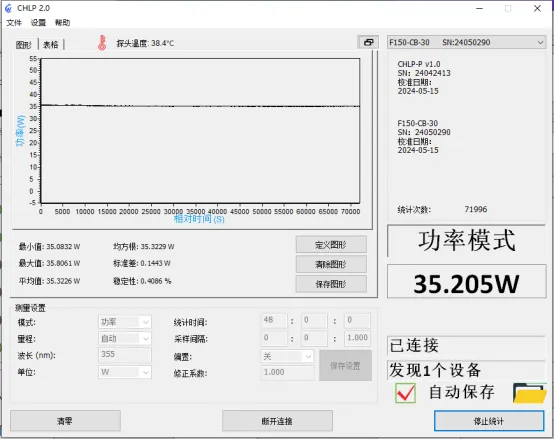
Energy stability:The energy stability of a laser refers to the degree of fluctuation of its output energy in time and space.For many applications,especially in areas that require high precision machining or consistency,such as medical treatment or precision machination,energy stability is a very important consideration.Good time stability means that lasers are able to maintain a steady output of energy while they are operating continuously without experiencing dramatic fluctuations.This is especially important for tasks that require long processing times,such as laser cutting,welding,etc.Good spatial stability means that the energy of the laser beam is distributed evenly on the surface of the workpiece,with no obvious hotspots or weak points.This is particularly important for tasks that require uniform processing,such as surface coating and lithography.
In summary,the performance of lasers cannot be summarized by a single indicator,Instead,it is a complex system constructed by many precision parameters such as output power,wavelength,pulse characteristics(pulse wideness,repeat frequency,single pulse energy),beam mass(spot diameter, circularity,diffusion angle,direction and position stability),and stability(energy,polarization).An in-depth understanding of these core properties and their interactions is a cornerstone of effective selection,optimization of applications,and driving laser technology innovation.