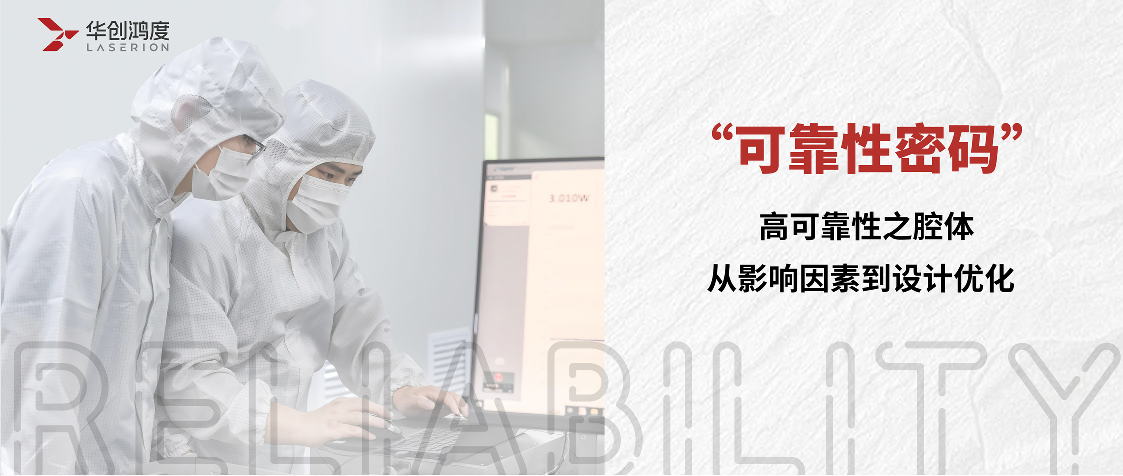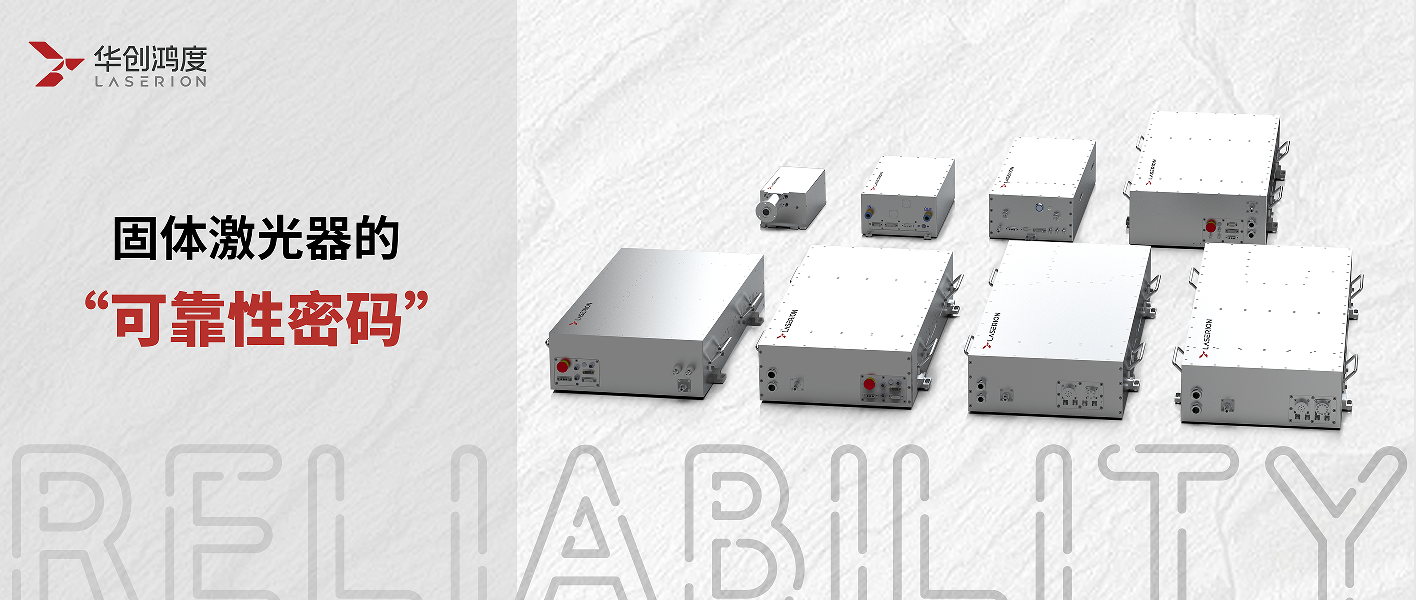
Ultrafast solid-state laser is a kind of light source that can produce femtosecond or picosecond ultra-short pulse.It is widely used in industrial processing,medical treatment, communication transmission and environmental detection.With the continuous expansion of use scenarios, improving its reliability has become the core goal throughout the whole process of technology development and mass production.
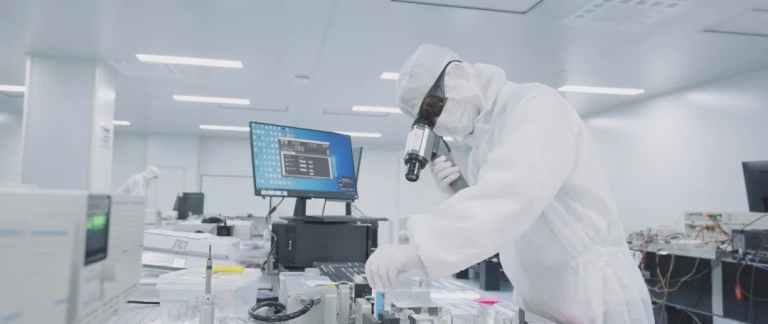
Reliability is the ability of the laser to perform its predetermined laser output performance without failure and stably within a specific range of conditions and time.It focuses on key indicators such as laser lifetime,long-term stability of output power,beam quality consistency,environmental adaptability and robustness.
In the field of laser processing,the laser is the core device in the related equipment,its reliability directly determines the production efficiency and quality stability,which is reflected in:
① To ensure continuous production
The laser needs to have the ability to operate steadily for a long time to meet the production rhythm requirements of the production line.Any unplanned downtime will directly lead to the disruption of production,resulting in delays in progress and loss of capacity.
② Ensure the quality of the process
In marking,cutting,welding and other applications,the small fluctuations in laser power,spot pattern or pulse energy will directly affect the quality of the workpiece,cause a decline in yield,and even trigger bulk waste.
③ Controlling Integrated Costs
Frequent calibration,repair and part replacement not only drive up maintenance costs,but also bring a lot of hidden costs due to production line stagnation.
④ Support process standardization
A stable laser output is the basis for achieving the standardization of machining parameters and reproducibility of the process.
As a complex optical,mechanical and electrical integrated system,the reliability of solid state laser faces many technical challenges.
① Progressive decay of material properties
The optical uniformity of gain media and the consistency of doping processing defects will gradually change with the working time and load conditions(such as thermal load,pump intensity),resulting in laser performance attenuation(such as conversion efficiency decline and loss rise).
② Light path stability requirements are extremely high
The laser is a three-dimensional free-space optical path,the position and angle deviation of each component needs to be controlled at the micrometer level.Any slight deviation can cause optical path imbalance,affecting output performance.In addition,pump source and laser crystal work heat caused by non-uniform thermal expansion may further lead to structural deformation,change the relative position of optical elements,interfere with the optical path and affect the stability of the system.
③ The operating environment is complex and sensitive
External factors such as changes in the environment (temperature,humidity,air cleanliness,etc.) and mechanical vibration shock may directly or indirectly cause performance fluctuations or component damage.
④ Multi-parameter cooperative control is difficult
High-reliability lasers require simultaneous LD drive current and temperature,The crystal temperature (especially the nonlinear crystal),the cavity humidity and even the component fine-tuning mechanism are precisely controlled.Any control loop failure or performance drift may lead to the collapse of the whole machine performance.
In the face of the above challenges,there is no single solution to achieve a high-reliability laser,but the precise collaboration of optics,mechanics and electro-control results.This requires us to systematically promote the selection of components,structural design,system control and manufacturing process,Only by systematically embedding the concept of reliability into every link from design to delivery can we truly create a trustworthy product,this has provided solid support for the stable operation of key fields such as precision processing.
Trailer for the series
As the first column in the”High Reliability”series,this paper introduces the key control dimensions of solid state laser reliability from a system perspective.In the coming days,we will deeply dissect the specific path of “reliability”from three aspects,respectively:optics, machinery,and electrical control.Please pay attention.