In the first two articles of the TGV series , we discussed the industrialization path of TGV technology , as well as the specific processing results of Huachuang Hongdu TGV technology on Schott BF33 borosilicate glass.
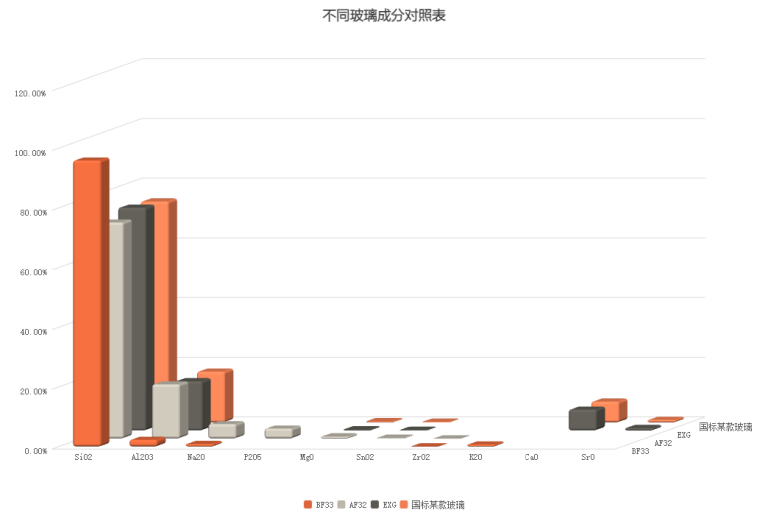
△ A Comparison Table of Different Glass Compositions ( Huachuang Hongdu self-test )
The characteristics of different glass substrates are different and it is necessary to optimize the process conditions and parameters . This article focuses on Corning EAGLE XG® ( ( EXG ) glass , to explore how our TGV technology adapts to its material properties , and to unleash its advantages in high-frequency signal transmission and advanced packaging scenarios.
The TGV concept was pioneered by Corning , whose EXG glass was also used in early TGV research . It can be said that , as long as you talk about the TGV , you can ‘t avoid EXG . The glass substrate launched in 2006 does not contain any heavy metals . The ” XG ” stands for ” Extra Green , ” highlighting its environmental characteristics .
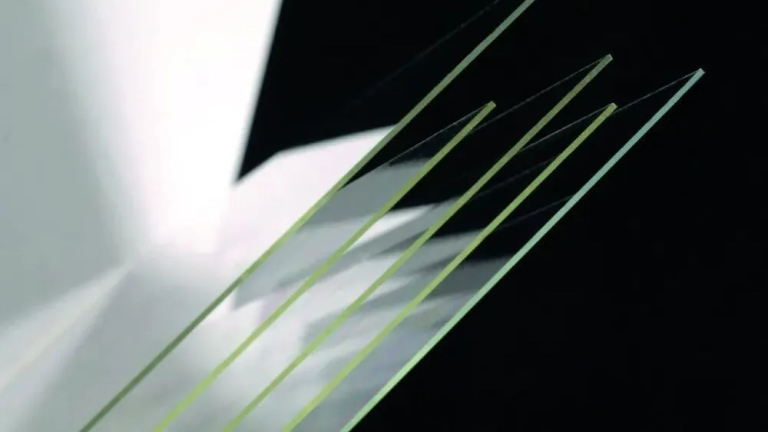
△ Corning EXG Glass ( Image from Corning’s Official Website )
As the industry ‘s first fully non-metal display glass substrate , EXG is an ideal choice for Liquid Crystal Display ( LCD ) , favored by leading panel manufacturers , with the following technical characteristics :
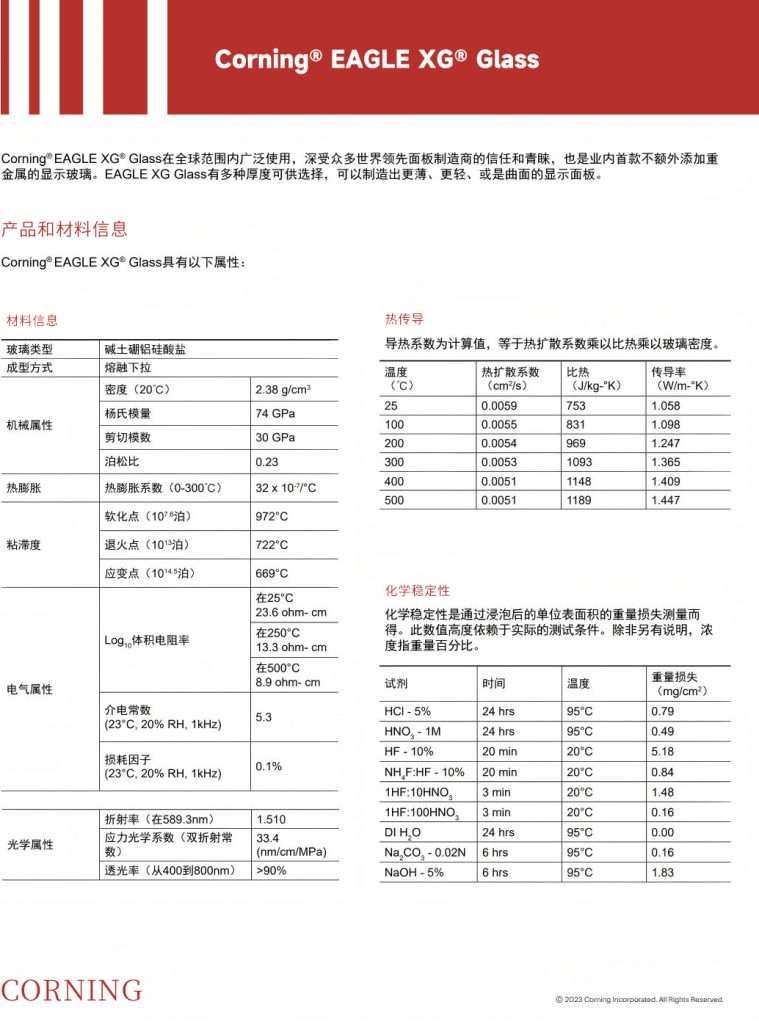
△ Corning EXG Glass Material Information ( Image from Corning Official Website )
Any product that is chosen by the market has its advantages and limitations . As a cost-effective choice in imported glass , EXG has a higher process threshold , and the difficulty of through-hole machining is significantly higher than that of other glass under the same thickness .
Taking a thickness of 0.5mm as an example: BF33 can process through holes with a diameter of 10μm, while the smallest hole diameter of EXG is about 30μm at the same thickness, which is difficult to open。This is mainly because the alkali-free metal composition of EXG requires a narrower energy window in the laser modification stage and a higher sensitivity to the concentration and temperature of the solution in the wet etching stage. Therefore the EXG is a more demanding test for the fine control of the perforation process .
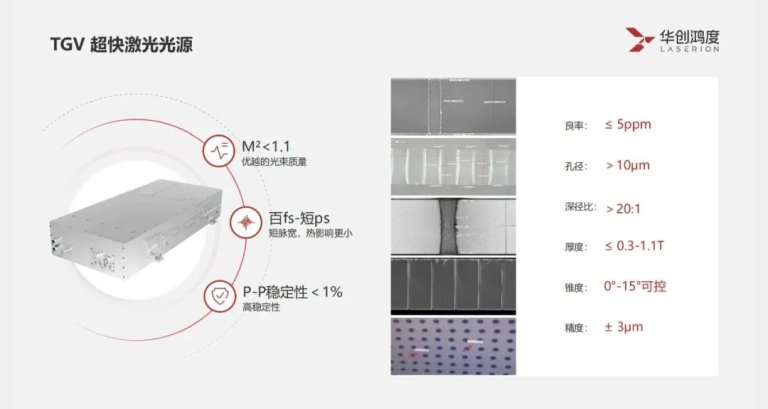
△Super Fast Laser Light Source for Huachuang Hongdu TGV
In response to this challenge, Huachuang Hongdu TGV solution shows a clear advantage。Our self-developed TGV ultra-fast laser source can flexibly optimize key performance indicators such as pulse width, beam quality and pulse stability according to different needs. Based on custom light source and self-controlled etching technology, we achieve excellent through-hole effect on Corning EXG: The minimum hole diameter of 0.5mm substrate is 30μm and can explore smaller size。The perforation conductivity is 70% -80%, and the side wall is smooth without breaking edges and without cracks.Good aperture consistency, meet the needs of high-density interconnection.
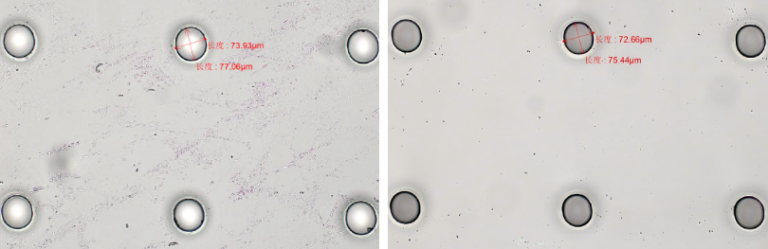
△ Laser Induced – glass Front ( Left ) Back ( Right ) ( Huachuang Hongdu Microscopic Measurements )
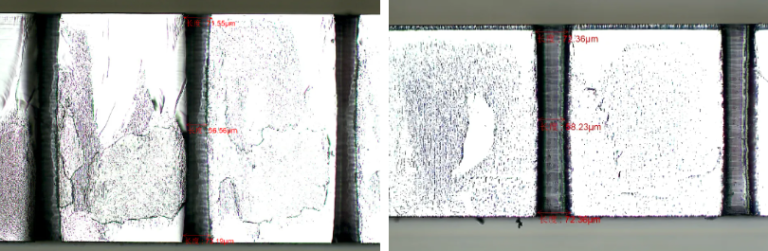
△ The Glass Carved End Surface ( Huachuang Hongdu Microscopic Measurements )
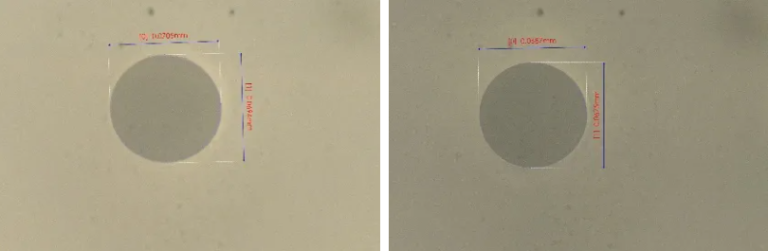
△ Demonstration of Perforation Effect ( Huachuang Hongdu Microscopic Measurements )
Huachuang Hongdu ” custom laser source + self-controlled etching process ” scheme takes ” stable and controllable ” as the core goal – laser modification provides selectivity , wet etching provides efficiency , and the two work together .
Based on the above path , we have demonstrated excellent TGV processing capability on Corning EXG substrate , with the following specific technical indicators :
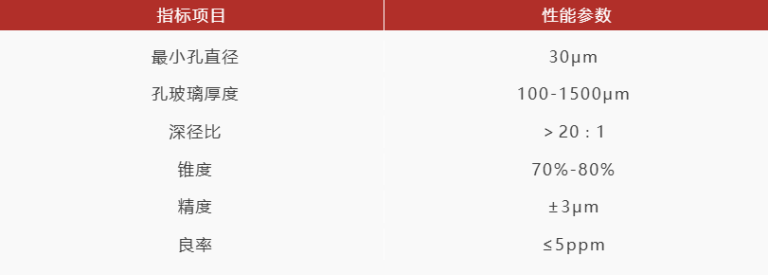
The Corning EXG combines cost-effectiveness , low dielectric loss and clean properties , and is naturally suitable for high-frequency and high-speed signal transmission scenarios . The precision TGV machining technology of Huachuang Hongdu can realize low taper and high consistency through holes , effectively avoiding traditional laser ablation . Micro-cracks , rough sidewalls and thermal stress caused by mechanical drilling , etc . , for RF front-end , optoelectronic co-packaging and other high-end applications to provide a reliable foundation .
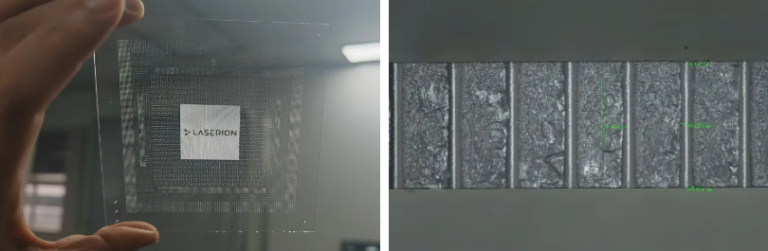
△ TGV Sample Display ( Huachuang Hongdu Microscopic Measurements )
The difficulty of TGV lies in the consistency of the effect under different materials , sizes and batch conditions . The TGV solution of Huachuang Hongdu has completed the test and process verification on a number of glass substrates of Corning , Schott , Rainbow and Kaixing , upgrading the process capability from ” single material fitting ” to ” general multi-material manufacturing , ” providing stable , controllable and mass-produced TGV perforation solutions for imported and domestic glass .